Seasonal forklift hire lets operations scale material handling capacity up or down quickly by renting suitable forklifts for the exact duration of a peak need, reducing capital outlay while preserving throughput. This article explains how short-term forklift rental and temporary forklift rental work, the operational mechanisms that deliver value, like maintenance, rapid replacement and access to modern models, and the specific benefits for construction, warehousing and agricultural seasonal surges. Readers will learn which forklift types to choose for different environments, how to forecast and book equipment in advance, and practical rent-versus-buy guidelines that protect cashflow during busy periods. The guide also covers emergency hire playbooks to minimise downtime and SLA expectations that matter when peak volumes cannot slip. Throughout, keyword concepts such as forklift hire for seasonal projects, seasonal forklift hire and short-term forklift rental are used in context to help you apply these approaches to your own peak-season planning.
Why Choose Seasonal Forklift Hire for Peak Demand Projects?
Seasonal forklift hire for peak demand projects means renting material handling equipment for a defined period so you can match fleet size to workload and avoid long-term capital commitments, which works by converting fixed capital expenses into controllable operational spend. This approach reduces the total cost of ownership because providers typically include maintenance and rapid replacement, which maintains uptime and preserves labour efficiency. Seasonal hire also gives access to newer models and attachments without the purchase lead time, enabling teams to trial equipment and adopt technology that improves safety and productivity. Understanding these mechanisms clarifies why temporary forklift rental is often the better option for short, intense demand windows and informs the selection of contract terms that protect project delivery.
Short-term forklift rental provides distinct operational benefits that support peak projects:
- Operational flexibility: Hire allows immediate fleet scaling to meet temporary surges without long-term commitments.
- Predictable operating expense: Rental fees convert unpredictable capital spending into forecastable OPEX.
- Maintenance offload: Rental agreements often include servicing, which reduces in-house repair overhead.
These benefits make seasonal hire attractive for projects where utilisation rates drop once the peak ends, and they set up the next discussion on how hire specifically reduces maintenance and ownership burdens.
To summarise, seasonal hire shifts risk and maintenance responsibility to the provider while delivering fleet agility, which directly supports project continuity and cost management during intense demand periods.
What Are the Key Benefits of Short-Term Forklift Rental?
Short-term forklift rental gives teams immediate access to the right equipment without the cashflow strain of buying, operating through a mechanism that bundles equipment, servicing and replacement into a predictable contract that preserves uptime. Organisations benefit from reduced capital expenditure and faster response to variable demand, while managers avoid depreciation and disposal headaches that come with ownership. Short-term hire also enables trial-before-purchase arrangements so procurement decisions can be based on real operational data rather than forecasts. The transition into the next topic is natural: when you shift maintenance and replacement responsibility to a hire provider, you significantly reduce in-house maintenance burden and financial volatility during peaks.
How Does Forklift Hire Reduce Costs and Maintenance Burden?
Forklift hire reduces cost and maintenance burden by moving responsibility for preventive servicing, parts and emergency repairs to the rental provider and by turning depreciation into a controllable monthly expense, which lowers administrative and capital overhead. With maintenance included in many hire agreements, internal teams can focus on core operations and avoid scheduling downtime for repairs during busy periods. Operators also gain from consistent servicing standards and access to recently maintained machines, reducing breakdown risk and improving safety. This reduction in maintenance burden affects procurement strategy directly, encouraging businesses to prioritise flexibility and uptime over ownership during seasonal projects.
| Hire Attribute | Characteristic | Impact |
| Flexibility | Short-term scaling and return options | Matches capacity to demand without long-term capital |
| Cost structure | OPEX-focused rental fees | Improves cashflow predictability and avoids depreciation |
| Maintenance | Preventive and corrective servicing often included | Reduces in-house repair load and minimises downtime |
This comparison highlights how hire attributes combine to lower risk and operational complexity for seasonal work, setting up equipment-type choices that follow.
After evaluating the benefits above, consider a real-world hire example from an industry provider to see how these advantages are packaged and delivered.
Which Forklift Types Are Best Suited for Seasonal and Temporary Projects?
Choosing the right forklift type for seasonal projects means matching machine capabilities to site conditions and load profiles, because the environment (indoor/outdoor, rough terrain, narrow aisles) determines which powertrain, tyre type and lifting capacity will deliver safe, efficient handling. For outdoor construction or harvest work, all-terrain or rough-terrain units provide traction and stability; for indoor warehouse peaks, electric forklifts offer zero local emissions and quieter operation; telehandlers and heavy-duty lifts support oversized loads and reach requirements on large projects. Selecting the correct type reduces cycle time and avoids equipment mismatches that create bottlenecks, and informed selection also shortens lead times because hire suppliers can pre-stage appropriate units when demand is forecasted.
| Forklift Type | Best Use Case | Key Specs / Benefit |
| All-Terrain Forklift | Outdoor construction and uneven ground | High traction, rough-terrain tyres, robust mast for heavy loads |
| Electric Forklift | Indoor warehouse peaks and stocktakes | Zero local emissions, low noise, manoeuvrable in aisles |
| Gas/Diesel Forklift | Mixed indoor/outdoor heavy lifting | Higher continuous power and quick refuelling for extended shifts |
These mappings help teams pick the machine that reduces downtime and aligns performance to seasonal demands, which leads naturally into specific scenarios for each model type and safety considerations.
When Should You Use All-Terrain Forklifts for Construction Sites?
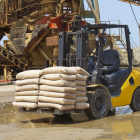
All-terrain forklifts are suited to construction sites and outdoor seasonal projects where uneven ground, mud or loose aggregates would stall standard machines because they combine elevated ground clearance with robust tyres and reinforced forks. Use them when load weights are heavy, delivery points are dispersed across rough surfaces, or when reach and stability are required to place materials into elevated positions. Safety considerations include ensuring ground-bearing capacity, confirming operator training for rough-terrain conditions, and inspecting mast and tyre condition before deployment. Preparing the site by establishing stable access routes and staging areas reduces machine wear and expedites material flow during busy construction peaks.
Why Are Electric Forklifts Ideal for Indoor Warehouse Operations?
Electric forklifts are ideal for indoor warehouse operations during holiday peaks or seasonal stocktakes because they produce zero local emissions, run quietly and provide instant torque that improves cycle times in dense picking layouts. Battery management must be planned for peak periods: rotating charged batteries and scheduling opportunity charging prevents mid-shift downtime, and a charging plan should be part of any hire contract. Electric models also have lower routine maintenance points compared with internal combustion units, which reduces onsite servicing during high-activity windows. Ensuring battery swap or charging logistics is coordinated with hire delivery secures uninterrupted operations through the busiest shifts.
When choosing any of these types from a hire fleet, confirm availability, lead times and attachment compatibility to avoid last-minute mismatches that can disrupt throughput.
How Can Businesses Plan and Manage Forklift Hire for Seasonal Efficiency?
Planning and managing forklift hire for seasonal efficiency begins with demand forecasting and ends with contract and site logistics that ensure equipment arrives on time, is correctly specified, and returns without penalties, because robust forecasting and clear SLAs reduce the risk of capacity shortfalls. Effective planning uses historical activity, order visibility and supplier lead times to set booking triggers and contingency margins. Contract features such as flexible durations, upgrade/downgrade options and included maintenance are critical to protecting project timelines. Coordinating delivery windows, operator familiarisation and on-site staging completes the plan and positions teams to scale operations smoothly when peaks occur.
Use the following practical checklist to structure forecasting and booking activity.
- Review historical peak volumes and set percentage thresholds that trigger hire bookings.
- Confirm supplier lead times and reserve equipment well ahead of projected peaks.
- Build contingency capacity as a percentage buffer to cover unplanned surges or breakdowns.
This checklist emphasises anticipatory actions that avoid last-minute rentals and transitions naturally to specific forecasting heuristics that make booking decisions more reliable.
What Are the Best Practices for Forecasting Seasonal Forklift Demand?
Best practices for forecasting seasonal forklift demand combine historical order/throughput data with forward-looking signals like confirmed promotions, seasonal contracts and supplier lead times to generate a practical booking plan that minimises overhire. Establish simple heuristics, such as booking additional capacity when projected volume exceeds X% of historical peak, to create objective triggers for hire. Communicate forecasts with suppliers early and maintain rolling updates so lead times are honoured and machines are staged near site when required. Embedding these practices into procurement and operations planning reduces scramble hiring and ensures hired machines match expected workloads.
How Does Flexible Rental Contracting Support Peak Season Needs?
Flexible rental contracting supports peak season needs by offering short durations, seamless extensions, included servicing and rapid replacement clauses that remove administrative friction and maintain uptime during intense operational windows. Look for contracts with scalable quantities, transparent pricing for extensions, and clear SLA definitions for response times and replacement policies. Negotiating clauses that allow equipment swaps without punitive fees keeps operations agile as needs evolve. A well-crafted contract reduces the risk of misalignment between project tempo and rented capacity and leads into vendor selection considerations when choosing a reliable hire partner.
| Forecasting Approach | Characteristic | Benefit |
| Historical thresholds | Use past peaks as booking triggers | Objective decision points reduce last-minute hiring |
| Rolling forecasts | Regular updates tied to sales/orders | Aligns supplier scheduling with current demand |
| Buffer capacity | Reserve contingency units | Protects against unplanned surges or equipment failure |
This table clarifies how different planning approaches contribute to booking resilience and informs the next section on provider selection and support.
How Does Active Forklift Support Seasonal Projects Across Australia?
Active Forklift provides sales, servicing, repairs and hire of forklifts and material handling equipment across Australia, and its hire offering demonstrates the practical execution of the planning and contract features outlined earlier. As part of the KION Company and with a national service footprint that includes Sydney, Melbourne and Brisbane, Active Forklift supplies diverse equipment, such as all-terrain, electric and gas forklifts, to meet construction, warehousing and outdoor seasonal demands. The company’s hire packages emphasise flexibility, maintenance inclusion, quick replacement to minimise downtime and the option to trial equipment before purchase, all of which align with the benefits of seasonal forklift hire previously discussed. For teams seeking local support, Active Forklift operates from a known service location and can provide tailored solutions that match specific project timelines and site conditions.
What Tailored Solutions Does Active Forklift Offer for Construction and Warehousing?
Active Forklift’s fleet includes all-terrain and heavy-duty options suitable for construction sites as well as electric and indoor models designed for warehouse peaks, which allows a matched solution for both outdoor and indoor seasonal projects. Their service package approach bundles maintenance and repair support with hire agreements, reducing administration for clients during busy periods and providing swift technical response to breakdowns. Practical examples include staging electric units for holiday warehouse surges and supplying rough-terrain machines for short construction booms, illustrating how equipment selection and servicing are coordinated to minimise downtime. This direct application of hire capabilities demonstrates how provider services translate planning into operational reliability.
How Does Expert Advice Enhance Forklift Selection and Support?
Expert advice enhances forklift selection and support by conducting site assessments, recommending appropriate capacities and attachments, and aligning hire durations to forecasted work cycles so machines match real operational needs. A structured process, site assessment, model recommendation, scheduled deployment and on-going support, reduces mismatches that can slow material flow and increases safety by ensuring operator training and suitable attachments. During seasonal peaks, expert input also helps prioritise charging infrastructure for electric fleets and staging plans for large deliveries. Integrating technical advice into the hire process optimises uptime and improves task efficiency throughout a project lifecycle.
| Service | Feature | Value |
| Hire supply | All-terrain, electric, gas forklifts | Matches equipment to diverse site conditions |
| Servicing & repairs | Included maintenance options | Minimises in-house repair workload and downtime |
| Rapid replacement | Emergency swap clauses | Maintains continuity during critical peaks |
What Are the Cost-Effective Strategies for Temporary Forklift Rental?
Cost-effective strategies for temporary forklift rental focus on optimising utilisation, selecting maintenance-inclusive packages and using short-term agreements to avoid long-term capital lock-in, because these tactics preserve cashflow and reduce lifecycle costs during peaks. Bundling maintenance with hire, negotiating extension options and planning bookings against reliable forecasts lowers overall spend compared with unplanned ad-hoc hiring or purchasing equipment for intermittent use. Another strategy is to use hire as a bridge when demand spikes to avoid the depreciation and resale risk associated with buying units that will be idle after the season. These operational financial choices form the basis for a practical rent-versus-buy assessment that follows.
| Decision Factor | Renting (Temporary) | Buying (Capital Purchase) |
| Upfront cost | Low, OPEX model | High, CAPEX outlay |
| Maintenance responsibility | Often provider | In-house or contracted |
| Lead time | Short with staged fleets | Long procurement cycles |
| Ideal use-case | Intermittent/seasonal peaks | Continuous, high-utilisation needs |
This table helps quantify the trade-offs and paves the way for a brief break-even thought exercise to illustrate when renting becomes preferable.
How Does Renting Compare to Buying Forklifts for Seasonal Use?
Renting compares favourably to buying for seasonal use when utilisation is low outside peak windows because the rental model avoids large upfront capital and the sunk costs of depreciation, while providing included servicing to reduce operational overhead. If a machine is needed less than a defined utilisation threshold, commonly when it will be idle more months than active, rental typically delivers a lower total cost of ownership. Renting also shortens lead times and facilitates access to the latest models, which can increase efficiency in fast-paced seasonal operations. Comparing these factors against project timelines, available capital and expected utilisation clarifies the best procurement path for each organisation.
What Financial Advantages Does Short-Term Hire Provide During Peak Periods?
Short-term hire provides financial advantages such as improved cashflow management, predictable operating expenses, avoidance of depreciation risk and reduced capital allocation, which collectively free the budget for core project activities. Illustratively, if purchasing a forklift requires a large CAPEX commitment, hiring the same capacity for a 3-month peak converts that cost into a manageable monthly rate and avoids resale uncertainty after the season. Additionally, maintenance-inclusive hire reduces unplanned repair spend and administrative effort, and enables accurate cost forecasting for peak periods. These advantages typically outweigh purchase benefits when seasonal demand is the primary driver of equipment needed.
| Option | Attribute | Typical Outcome |
| Renting | Predictable monthly cost | Improved cashflow and budget planning |
| Buying | High upfront investment | Long-term asset value but resale risk |
| Bundled hire | Maintenance included | Lower operational variability |
This final table summarises how financial structuring of equipment acquisition supports seasonally driven projects and transitions into emergency protocols that preserve productivity.
How Can Emergency Forklift Hire Minimise Downtime During Seasonal Surges?

Emergency forklift hire minimises downtime by providing rapid deployment of replacement machines and emergency repair support under predefined response times, thereby restoring material handling capacity quickly when equipment fails during critical windows. The mechanism relies on SLA clauses that define response and replacement timelines, plus pre-staged contingency units that a provider can deploy. Knowing when to trigger emergency hire and what the replacement process entails keeps operations moving and prevents cascade delays across supply and production tasks. Clear expectations for response times and replacement policies are central to minimising disruption during seasonal surges.
Below is a compact action checklist for emergency hire readiness.
- Identify clear triggers for emergency hire such as complete breakdowns during peak shifts, sudden volume spikes beyond capacity, or failed scheduled deliveries.
- Pre-agree SLA response times and replacement policy with your provider to ensure predictable timelines.
- Maintain a contingency reservation or rapid-deploy arrangement for peak seasons to avoid sourcing delays.
This checklist prepares teams to act decisively when equipment issues arise and introduces the next section on critical deployment triggers.
When Is Rapid Forklift Deployment Critical for Project Continuity?
Rapid forklift deployment becomes critical when a single equipment failure threatens a chain of operations, such as a halted loading bay during a dispatch window or a stalled line during an inventory peak, because even short delays can cascade into missed deadlines and increased labour costs. Triggers include major breakdowns during peak shifts, unexpected surges in inbound or outbound volumes, and critical delivery windows that cannot be moved. Decision rules should be established in advance so operations managers know when to request emergency replacement rather than attempt onsite repair. Having those rules reduces hesitation and aligns field action with supplier response.
What Maintenance and Replacement Services Are Included in Hire Agreements?
- Trigger definitions, SLA terms and contact procedures should be documented before peak seasons begin.
- Ensure replacement turnarounds and technical support hours are explicitly stated in hire contracts.
- Regularly review and rehearse emergency procedures to ensure rapid supplier mobilisation when needed.
| Service Element | Typical Inclusion | Expected Benefit |
| Preventive maintenance | Scheduled servicing by provider | Fewer breakdowns during peaks |
| Emergency repair | Technical response service | Faster on-site recoveries |
| Replacement equipment | Rapid swap clauses | Minimal operational downtime |
This table clarifies typical service commitments to expect in hire agreements and completes the article’s coverage of seasonal planning, equipment selection and provider engagement.