Choosing the right industrial forklift shapes safety, throughput, and operating cost for any materials-handling operation, whether a narrow-aisle e-commerce warehouse or a weather-exposed construction site. This guide explains the main types of industrial forklifts, how each design works, and the practical benefits they deliver so you can match machine capability to real-world tasks. Readers will get clear comparisons of load capacity, lift height, power source, and ideal environment alongside decision matrices and procurement guidance. Common pain points, limited aisle width, uneven terrain, electrification demands, and peak seasonal workloads, are addressed with actionable selection steps and hire-versus-buy analysis. The article covers counterbalance and reach trucks, rough-terrain machines, telehandlers, and side loaders; it explains electric versus internal-combustion trade-offs, offers construction-focused equipment guidance, and summarises 2025 trends such as lithium-ion adoption and automation. After technical sections, you’ll find practical checklists and tables that map operating environments to recommended forklift types and outline when to consult a supplier for a tailored solution.
What Are the Main Types of Industrial Forklifts and Their Key Features?
Industrial forklifts fall into distinct categories defined by how they lift, stabilise, and power loads, each optimised for particular environments and tasks. Understanding these types helps you choose equipment that balances capacity, lift height, maneuverability, and cost. The following subsections define each major type, describe core mechanics, and list the environments where they perform best. Read through each type to compare trade-offs such as aisle width needs, tire choice, and operator training implications, which leads naturally into a compact comparison table summarising key attributes.
What Defines Counterbalance Forklifts and When Are They Ideal?
Counterbalance forklifts use a rear counterweight to offset loads lifted at the front, making them straightforward and versatile for loading docks and general warehouse tasks. They come in 3-wheel and 4-wheel variants: 3-wheel models provide tighter turning radii for compact aisles, while 4-wheel machines offer greater stability at higher capacities. Typical uses include pallet handling, stacking to moderate heights, and truck loading, with power options ranging from electric to LPG or diesel depending on indoor/outdoor mix. Consider counterbalance models when you need a general-purpose truck that requires minimal specialised infrastructure, and next compare reach trucks for narrow-aisle optimisation.
How Do Reach Trucks Optimise Narrow Aisle and High-Rack Operations?
Reach trucks extend a mast forward between the truck’s legs so forks can access racks without moving the chassis into the aisle, making them ideal for very narrow aisle (VNA) warehouses. Their stand-up or sit-down configurations and higher masts support lift heights often exceeding standard counterbalance limits, enabling dense racking and efficient vertical storage. Reach trucks prioritise lateral stability and require level, hard flooring and adequate aisle clearance, meaning they outperform counterbalance forklifts where vertical space is the binding constraint. Understanding reach mechanics prepares you to weigh lift height and aisle-width trade-offs when choosing between reach and counterbalance solutions.
What Are Rough Terrain Forklifts and Their Applications in Construction?
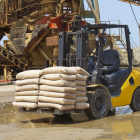
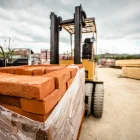
Rough terrain forklifts are built with heavy-duty drivetrains, high-traction pneumatic tires, and reinforced frames to operate on uneven surfaces and unpaved sites. They typically use powerful diesel engines and suspension systems that maintain stability and traction on mud, gravel, and gradients while offering higher ground clearance than warehouse trucks. Common applications include on-site pallet movement, material placement from lorries, and transfer of bulky loads across irregular terrain where standard forklifts would stall or tip. When evaluating rough-terrain suitability, inspect tire choice and drivetrain resilience to ensure safe performance under site-specific conditions.
Why Choose Telehandlers for Versatile High-Reach Material Handling?
Telehandlers combine a telescopic boom with forklift-style forks or attachments, giving long horizontal and vertical reach that bridges the gap between forklifts and small cranes. Their ability to fit attachments such as buckets, winches, and specialised clamps makes them highly versatile for placing materials at height, over obstacles, or into confined zones that cranes or conventional forklifts cannot reach. Telehandlers require attention to load charts when the boom is extended because capacity diminishes with reach, and stabilisers or outriggers are often used to maintain safety. For projects needing both reach and attachment flexibility, telehandlers provide a cost-efficient option compared with dedicated cranes.
When Are Side Loaders Best for Long Load and Narrow Aisle Handling?
Side loaders load and transport long, heavy items from the side, allowing long loads such as timber, pipe, and sheet metal to be handled in narrow aisles without turning. Their sideways-loading design keeps long loads within the truck footprint and reduces aisle width requirements compared with conventional front-loading forklifts. Industries handling lengthy materials or needing high-density racking often choose side loaders for improved throughput and operator visibility of long loads. Consider side loaders when storage of long goods dominates your layout, but balance that against higher specialised cost and training needs.
What Are the Benefits and Uses of Electric Forklifts in Warehouses?
Electric forklifts offer zero tailpipe emissions, lower noise levels, and reduced routine maintenance compared with internal-combustion alternatives, improving indoor air quality and operator comfort. Battery options include lead-acid for lower-capex fleets and lithium-ion for faster charging and opportunity-charging workflows, which can increase uptime in multi-shift warehouses. Electric trucks suit cold storage, food, and pharmaceutical warehouses where emissions and noise are constrained, and they often have lower total cost of ownership through reduced fuel and service spend. After considering these benefits, the next section contrasts gas and diesel models for outdoor and mixed environments.
How Do Gas and Diesel Forklifts Compare for Indoor and Outdoor Use?
Gas (LPG) and diesel forklifts provide high power density and fast refueling, which suits continuous heavy workloads and outdoor environments, but they emit combustion byproducts and generate more noise than electric models. LPG can be used in semi-indoor settings with ventilation, while diesel is preferred for tough outdoor tasks like construction and bulk yard handling where torque and durability are priorities. Maintenance typically involves engine servicing, fuel system checks, and particulate controls for diesel machines. Evaluating these trade-offs helps identify whether the operational profile warrants combustion power or electrification.
| Forklift Type | Typical Load Capacity | Common Lift Height | Typical Power Source | Ideal Environment |
| Counterbalance | 1,000–5,000 kg | Up to ~6 m | Electric / LPG / Diesel | General warehouses, loading docks |
| Reach Truck | 500–2,500 kg | 8–12+ m | Electric | Narrow-aisle, high-bay warehouses |
| Rough Terrain | 2,000–10,000 kg | 2–6 m | Diesel | Construction sites, uneven outdoor yards |
| Telehandler | 1,000–6,000 kg | 6–20 m (boom dependent) | Diesel / LPG | Construction, agriculture, mixed sites |
| Side Loader | 1,000–6,000 kg | 2–6 m | Electric / Diesel | Long-load storage, narrow aisles |
| Electric Counterbalance | 1,000–4,000 kg | Up to ~6 m | Lithium-ion / Lead-acid | Indoor, emissions-sensitive sites |
This comparison highlights which design features match specific operational needs and prepares you to map the environment to equipment choices in the next section. After reviewing types, consider supplier availability for purchase and hire.
As an Australian supplier-focused note, Active Forklift offers a broad range of these forklift types for both sale and short- or long-term hire, supported by sales, rental, service, and repair capabilities across major cities. Their independent ownership and partnership within the KION Company, together with combined industry experience, position them to advise on suitability and supply options for different operation types.
How to Choose the Right Industrial Forklift for Your Operating Environment?
Selecting the right forklift begins with mapping your operating environment to machine attributes such as capacity, lift height, aisle width, and terrain, then matching power source and duty cycle to daily usage patterns. The decision process reduces to clear criteria: the heaviest loads and required lift heights set capacity and mast choices; surface conditions and gradients determine tire and drivetrain needs; and aisle widths drive whether counterbalance or reach/VNA solutions are appropriate. Below you’ll find factors to measure, a practical decision checklist, and a compact EAV table linking environments to recommended forklift types to streamline procurement.
What Factors Affect Forklift Selection: Load Capacity, Lift Height, and Terrain?
Load center, maximum load, and lift height are foundational specifications that determine rated capacity and safe operating envelopes for any forklift. Measure actual load weights and their center of gravity, add the weight of attachments, and allow a safety margin when selecting rated capacity, because capacity declines with mast height and attachments. Terrain assessment addresses tire type (solid vs pneumatic), ground preparation, and gradient limits; hard, level floors suit reach and electric trucks while uneven surfaces require rough-terrain tires and higher ground clearance. Clear measurement of these factors enables an informed equipment shortlist and smoother supplier consultations.
Which Forklift Types Are Best for Indoor Warehouses vs. Outdoor Construction?
Indoor warehouses prioritise emission control, noise reduction, and aisle efficiency; electric counterbalance, 3-wheel, and reach trucks are typical choices for such environments. Outdoor construction sites require traction, engine power, and robustness, favoring rough-terrain forklifts and telehandlers that tolerate mud, slopes, and heavy loads. For mixed environments, LPG or hybrid power options can balance indoor emissions with outdoor flexibility, but careful ventilation and operating protocols remain essential. Mapping these environment categories helps narrow options quickly during procurement.
How Does Power Source Influence Forklift Performance and Cost?
Power source affects upfront capital, operating expense, and infrastructure needs: electric forklifts require charging infrastructure and sometimes battery change rooms, while LPG and diesel need refueling logistics and greater engine maintenance. Lithium-ion batteries reduce opportunity-cost downtime through fast charging and can lower lifetime operating costs despite higher initial expense. Consider total cost of ownership over typical asset life and expected utilisation to compare CapEx versus OpEx, which will inform whether electrification or combustion power aligns with your budget and sustainability goals.
What Role Does Budget and Usage Frequency Play in Forklift Choice?
High-utilisation operations with predictable demand often justify purchase because ownership spreads capital cost across long service life, while irregular or project-based needs usually favor hire to avoid capital lock-in. Calculate simple break-even estimates comparing rental daily/weekly rates against depreciation, financing, and maintenance costs to determine thresholds where buying becomes economical. Budget constraints also influence specification: higher-grade attachments and telematics add cost but improve productivity and tracking, so prioritise features that deliver measurable operational gains. Having these financial parameters ready makes supplier quotes and lifecycle planning more precise.
| Operating Environment | Recommended Forklift Types | Key Considerations |
| Indoor, narrow aisles | Reach trucks, 3-wheel counterbalance | Aisle width, floor flatness, charging space |
| General warehouse | 4-wheel counterbalance, electric trucks | Load profile, shift patterns, attachments |
| Outdoor rough sites | Rough-terrain forklifts, telehandlers | Tires, engine power, weatherproofing |
| Long-load storage | Side loaders | Aisle layout, load length, operator training |
Use this decision matrix to shortlist models and then request site-specific quotes and demonstrations from suppliers to finalise selection. For tailored recommendations and free consultations on matching forklifts to environments, consider contacting an experienced supplier who provides sales, hire, and on-site service support.
Active Forklift can provide expert advice and free consultations to help apply this decision matrix to your site, offering sales and flexible hire options plus servicing and repairs to support deployment.
What Are the Advantages of Electric Forklifts Compared to Gas and Diesel Models?
Electric forklifts deliver lower operating noise, zero tailpipe emissions, and simpler drivetrain maintenance, which together reduce environmental impact and often lower lifetime operating expenses. Advances in battery technology, particularly lithium-ion, enable opportunity charging and higher cycle life that improve fleet uptime compared with lead-acid systems. These attributes make electric trucks especially attractive in emissions-sensitive industries and multi-shift warehouses where downtime costs are high. The subsections below explain lithium-ion benefits, environmental and safety gains, industry fits, and how suppliers support electric transitions.
How Do Lithium-Ion Batteries Enhance Electric Forklift Efficiency?
Lithium-ion batteries offer faster charging, higher usable energy density, and a longer cycle life than traditional lead-acid batteries, which reduces charging room footprint and eliminates scheduled battery changes. Opportunity charging between shifts is practical with lithium-ion, enabling continuous operations without swapping heavy batteries and lowering labor and storage requirements. The reduced maintenance and absence of acid handling improve safety and lower facility infrastructure costs over time. These operational gains make lithium-ion an attractive investment for high-throughput operations planning electrification transitions.
What Environmental and Safety Benefits Do Electric Forklifts Offer?
Electric forklifts eliminate tailpipe emissions at the point of use, improving indoor air quality and aiding compliance with occupational health standards in enclosed spaces. Lower noise levels reduce operator fatigue and facilitate clearer communication in busy warehouses, which contributes to safer operations. Additionally, fewer moving engine parts mean reduced routine maintenance tasks and fewer fluid leaks, minimising environmental contamination risk. Together, these benefits support both compliance and a healthier working environment for staff.
Which Industries Benefit Most from Electric Forklift Solutions?
Industries with strict indoor air requirements, cold storage, food and beverage, pharmaceuticals, and high-density e-commerce fulfillment, see clear advantages from electric fleets. Facilities with multi-shift operations and high throughput also benefit because fast-charging lithium-ion options increase vehicle availability and lower lifecycle costs. Businesses prioritising corporate sustainability targets find electrification supports emissions reporting and energy optimisation goals. Understanding industry fit helps target investment where electric forklifts deliver the largest operational and regulatory return.
How Does Active Forklift Support Electric Forklift Sales, Hire, and Service?
Active Forklift supplies electric forklifts for both sale and hire, backed by service, repairs, and on-site breakdown assistance according to location availability. Their offering includes advisory support to evaluate battery technology, charging infrastructure, and total cost of ownership so businesses can plan smooth transitions to electric fleets. By combining sales, rental, and aftercare, suppliers like Active Forklift can supply short-term hires for testing new battery systems or long-term purchases for full fleet replacement. For operations considering electrification, professional consultations clarify operational impacts and infrastructure investments.
- Zero tailpipe emissions that improve indoor air quality and compliance.
- Lower noise and maintenance leading to reduced operating costs and downtime.
- Lithium-ion option for fast charging which increases vehicle availability.
What Are the Key Applications of Rough Terrain and Telehandler Forklifts in Construction?
On construction sites, material access, placement at height, and movement across irregular surfaces are routine challenges that rough-terrain forklifts and telehandlers are designed to solve. Rough-terrain trucks move pallets and bulky items over soft or uneven ground, while telehandlers place materials into elevated or obstructed positions using booms and attachments. The following subsections unpack how each machine addresses common site tasks, attachment choices, and maintenance practices to prolong service life under harsh conditions.
How Do Rough-Terrain Forklifts Handle Challenging Outdoor Environments?
Rough-terrain forklifts employ large pneumatic tires with deep treads, robust axles, and high-torque engines to maintain traction and stability on mud, gravel, and slopes. Their chassis and suspension design protect driveline components from shock loading and vibration common on sites, while operator cabs prioritise visibility for safe material handling across cluttered areas. Regular checks on tire condition, seals, and air filters are crucial because dust and debris accelerate wear; planned maintenance keeps uptime high. Understanding these features helps site managers choose equipment able to sustain consistent productivity under difficult ground conditions.
What Makes Telehandlers Versatile for High Reach and Heavy Lifting?
Telehandlers combine telescopic reach, adaptable attachments, and stabilisation features to lift and place loads where standard forklifts or small cranes cannot operate. Attachment options such as buckets, pallet forks, and winches expand telehandler utility across loading, placing, and clean-up tasks. Operators must consult load charts closely because safe lifting capacity decreases as reach increases; using stabilisers where available enhances safety for extended outreach. Telehandlers become especially valuable on sites requiring a single flexible machine to handle diversified lifting tasks.
Which Construction Tasks Benefit Most from These Forklift Types?
Tasks that benefit include offloading delivery trucks onto uneven ground, lifting palletised materials to upper floors, positioning long items like beams, and clearing site debris where reach and mobility reduce manual handling risk. Frequent workflows include staged delivery schedules where telehandlers place materials directly at point-of-use, reducing internal transport time. Mapping these tasks to machine capabilities increases efficiency and minimises double handling, which directly reduces labor and equipment hours. Efficient task-equipment matching supports better project timelines and cost control.
How Can Active Forklift Assist Construction Companies with Equipment Selection?
Active Forklift offers site-based advice and equipment matching via sales and hire services, providing short-term hiring for project peaks and longer-term solutions for ongoing fleets. Their on-site service and breakdown assistance (location dependent) help construction firms maintain continuity and reduce project delays. Consulting with a supplier enables tailored recommendations on tire types, attachment fitment, and stabiliser options to match specific jobsite requirements. For construction teams facing varied site conditions, engaging a provider for a practical assessment streamlines procurement and reduces mismatch risk.
| Construction Task | Preferred Equipment | Operational Notes |
| Offloading on uneven ground | Rough-terrain forklift | Choose pneumatic tires and reinforced chassis |
| Placing materials at height | Telehandler with forks | Consult load chart for reach limitations |
| Handling long beams | Telehandler or side loader | Use appropriate attachment and stabilisers |
Should You Hire or Buy an Industrial Forklift? What Are the Pros and Cons?
Deciding whether to hire or buy depends on utilisation rates, capital availability, and the flexibility requirements of your operations. Hiring reduces upfront capital expenditure and enables rapid scaling for seasonal peaks, while buying can lower per-hour costs for continuously used assets and preserve availability. Consider maintenance responsibility, depreciation, insurance, and downtime risk when comparing options. The subsections below break down benefits of hire, buying thresholds, maintenance implications, and the solutions Active Forklift can provide to support both approaches.
What Are the Benefits of Forklift Hire for Flexibility and Cost Savings?
Hiring forklifts minimises capital outlay, provides immediate access to a range of machine types, and allows scaling to peak demand without long-term commitments. Rental agreements often include maintenance and support, which reduces the burden of service management and simplifies budgeting during projects. For short projects, trials of new technologies (such as lithium-ion electric trucks) via hire reduce investment risk while validating fit for purpose. These advantages make hire attractive for seasonal workload spikes and one-off projects that do not justify purchase.
When Is Buying a Forklift More Cost-Effective for Your Business?
Purchasing is typically more economical when utilisation is high and predictable because capital costs are amortised over a longer service life, and per-hour ownership costs fall below rental rates over time. Ownership allows specification of exact attachments, telematics, and training to optimise productivity, and long-term maintenance plans can be structured to reduce downtime. Evaluate break-even points by comparing expected rental spend against financed purchase costs, accounting for depreciation and resale value to decide when buying delivers superior return.
How Does Maintenance and Service Impact Hire vs. Buy Decisions?
Maintenance responsibilities differ: hired equipment may include some service in contract terms, while owned fleets require structured service packages and parts provisioning. Rapid breakdown response is critical to minimise downtime; service availability and certified technicians determine how quickly a truck can be returned to operation. Active Forklift provides on-site servicing and breakdown assistance (availability varies by location), which can influence the hire-versus-buy calculus when uptime guarantees or quick local support are priorities.
What Solutions Does Active Forklift Offer for Hire and Purchase Options?
Active Forklift supplies new and used forklifts for sale and hire, supports fleet commissioning, and offers servicing and repairs to keep machines productive. Their flexible rental terms suit short-term projects while sales options support long-term fleet purchases, complemented by on-site service and rapid response where available. Free quotes and expert consultations are offered to help businesses compare hire vs purchase scenarios and to identify the most cost-effective solution for their workload profile.
| Option | Upfront Cost | Flexibility | Maintenance Responsibility | Best For |
| Hire | Low | High | Supplier-inclusive (often) | Short-term projects, peaks |
| Buy | High | Moderate | Owner | High utilisation, long term |
What Are the Emerging Trends in Industrial Forklifts for 2025 and Beyond?
Looking ahead, electrification, lithium-ion battery adoption, automation, and AI-driven fleet management are reshaping procurement and operations as of 2025. E-commerce growth and tighter emissions expectations accelerate demand for electric options and predictive maintenance systems, while hydrogen and fuel-cell research progresses for heavy-duty applications. Understanding these trends helps fleet planners future-proof investments and choose equipment that supports integration with automation and telemetry over its service life.
How Is Electrification Shaping the Future of Forklift Technology?
Electrification reduces site emissions and operating noise, driven by regulatory focus and corporate sustainability targets, and lithium-ion batteries enable practical multi-shift electric fleets through opportunity charging. Transition planning should include charging infrastructure, energy management, and training for battery handling and safety. As electrification accelerates, suppliers that bundle advisory, sales, and service support simplify transitions and mitigate common implementation pitfalls, enabling smoother fleet turnarounds.
What Role Does Automation and AI Play in Warehouse Forklift Operations?
Automation and AI improve productivity through autonomous guided vehicles (AGVs/AMRs), predictive maintenance using telematics, and optimisation of pick paths for fleet efficiency. Integration with warehouse management systems enables real-time dispatching and reduces idle time, while predictive analytics forecast service needs to reduce unexpected downtime. Early adopters see gains in throughput and safety, though integration costs and change management must be balanced against projected efficiency wins.
How Are Market Growth and E-commerce Driving Forklift Demand?
E-commerce growth increases demand for fast throughput, dense storage solutions, and versatile handling equipment, prompting investments in rich trucks, order pickers, and electrified fleets to support faster cycle times. Warehouses prioritise vertical storage and narrow-aisle solutions to maximise footprint efficiency, driving equipment choices that enhance lift height and maneuverability. Growth forecasts encourage flexible procurement strategies to scale fleets in line with demand surges.
What Innovations Are Expected in Fuel Technologies Like Hydrogen Fuel Cells?
Hydrogen fuel cells offer rapid refueling and high energy density that could suit heavy-duty and continuous operations where battery charging is impractical, but infrastructure and cost barriers remain significant as of 2025. Pilot deployments are focused on sites where hydrogen refueling can be consolidated and safety protocols established. For many users, hydrogen remains an emerging option to watch, while lithium-ion continues to lead near-term electrification efforts.
- Electrification with lithium-ion batteries for uptime and sustainability.
- Automation and AI for fleet optimisation and predictive maintenance.
- E-commerce driven demand for narrow-aisle and high-lift solutions.
What Are the Most Frequently Asked Questions About Industrial Forklift Types?
Practical questions recur when teams evaluate forklifts: classification, compact options for small warehouses, terminology differences, and how to prepare for expert consultations. Concise answers support quick decisions and prepare operators to gather the right information for quotes and site assessments. The subsections below address these common queries and offer a checklist of documentation to bring to supplier consultations.
What Are the Different Classes and Types of Forklifts?
Forklift classification maps broadly to power source and application, with classes covering electric counterbalance, internal combustion for indoor/outdoor use, and specialised types like reach trucks and telehandlers for vertical or off-road needs. Each class aligns with typical environments: electric for indoor, combustion for heavy outdoor, reach for narrow aisle, and telehandlers for site versatility. Understanding these classes helps match regulatory and operational requirements to the correct equipment family.
Which Forklift Is Best for Small Warehouses or Limited Spaces?
Compact solutions include 3-wheel electric counterbalance trucks and reach trucks designed for narrow aisles, which minimise turning radius and maximise rack density. Measure aisle width and load footprint precisely, then select a truck with the necessary stability at the expected lift height. A quick checklist for small warehouses is to prioritise maneuverability, low noise, and compact battery solutions to optimise floor space and throughput.
What Is the Difference Between a Forklift and a Fork Hoist?
A forklift is a mobile industrial vehicle designed to lift and move loads across workplaces, while a fork hoist often refers to a stationary lifting device or an attachment for lifting; terminology can vary by region. In practice, forklifts combine mobility with lift mechanisms for transport, whereas hoists typically provide vertical lifting without the transport capability. Clarifying intended tasks helps determine whether a mobile forklift or a hoist/attachment better suits operational needs.
How Can I Get Expert Advice and Support for Choosing a Forklift?
Prepare load weights, load center measurements, required lift heights, floor plans showing aisle widths, and photographs of typical operating surfaces before meeting suppliers; this information enables tailored recommendations. Expect a supplier consultation to assess environment, duty cycle, and budget, and to propose configurations, attachments, and service options. Active Forklift and similar providers offer free consultations and quotes to help businesses translate site data into model selections and rental or purchase proposals.
To conclude the FAQ, here is a quick checklist of what to prepare for a site consultation:
- Load weight samples and load center distances.
- Rack heights and aisle width measurements.
- Typical ground surface photos and description of outdoor conditions.