Construction sites rely on efficient material handling to keep projects moving safely and on schedule. From transporting pallets of building materials to lifting heavy loads across uneven terrain, forklifts play a critical role in maintaining productivity and reducing manual labour.
However, not all forklifts are designed for the same tasks. Choosing the right forklift can significantly impact operational efficiency, workplace safety and project timelines. Understanding the different forklift types, their maintenance requirements and available hiring options allows construction managers to make informed decisions that maximise performance while controlling costs.
In this guide, we’ll explore the best forklifts for construction sites, compare their advantages, discuss maintenance best practices and explain how forklift hire solutions can support successful project outcomes.
Why Forklifts Are Essential on Construction Sites
Modern construction projects involve constant movement of materials, equipment and supplies. Without reliable material handling machinery, productivity can quickly suffer.
Forklifts are commonly used for:
- Moving pallets of bricks and blocks
- Transporting steel and structural materials
- Loading and unloading deliveries
- Supporting warehouse and storage operations
- Relocating tools and equipment around site
- Assisting with elevated material placement
By reducing manual handling and improving logistics, forklifts help streamline workflows and contribute to safer site operations.
Understanding the Different Types of Construction Forklifts
Selecting the right forklift starts with understanding the equipment available and how each model performs in different environments.
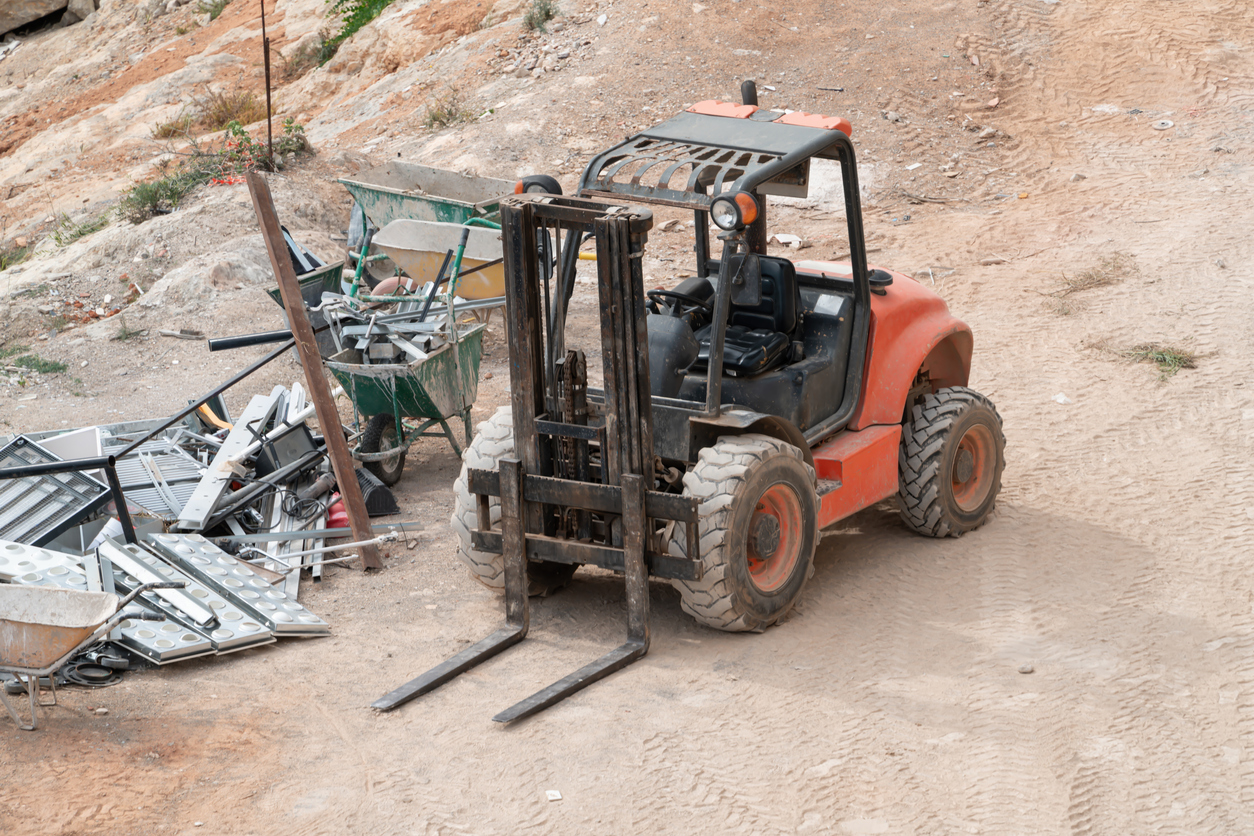
Rough Terrain Forklifts
Rough terrain forklifts are specifically designed for outdoor construction environments where ground conditions may be challenging.
Key features include:
- Large pneumatic tyres
- Enhanced ground clearance
- Strong traction capabilities
- Superior stability on uneven surfaces
These forklifts are ideal for construction sites with gravel, mud, slopes or unsealed ground where conventional forklifts may struggle.
Telehandlers
Telehandlers, also known as telescopic handlers, are among the most versatile machines used on construction projects.
Unlike standard forklifts, telehandlers feature an extendable boom that allows operators to place loads at height or reach across obstacles.
Common applications include:
- Multi-storey construction
- Roof material placement
- Elevated loading tasks
- Accessing difficult-to-reach locations
Their versatility makes telehandlers particularly valuable on large-scale commercial and infrastructure projects.
Electric Forklifts
Electric forklifts are becoming increasingly popular due to their environmental and operational benefits.
Advantages include:
- Zero exhaust emissions
- Quiet operation
- Lower running costs
- Reduced maintenance requirements
These forklifts are particularly suitable for indoor construction work, warehouses and projects operating within enclosed spaces.
As sustainability becomes a greater priority across the Australian construction industry, electric forklifts continue to gain popularity.
Diesel Forklifts
Diesel forklifts remain a preferred choice for heavy-duty outdoor applications.
Benefits include:
- High lifting capacities
- Strong performance in demanding environments
- Reliable operation during long shifts
- Excellent durability
Construction businesses often utilise diesel forklifts when handling large materials and heavy loads across extensive worksites.
How to Choose the Best Forklift for Your Project
Selecting the most suitable forklift involves more than simply choosing a fuel type.
Project managers should carefully assess several factors before making a decision.
Site Conditions
Construction sites vary significantly in terms of terrain and accessibility.
Questions to consider include:
- Is the ground level or uneven?
- Will the forklift operate indoors or outdoors?
- Are there space restrictions?
- Does the site contain steep gradients?
Understanding site conditions helps determine whether a rough terrain forklift, telehandler or standard forklift is most appropriate.
Load Capacity Requirements
Load capacity is one of the most important considerations when selecting equipment.
Choosing a forklift with insufficient lifting capability can create serious safety risks and reduce operational efficiency.
Businesses should assess:
- Average load weights
- Maximum load weights
- Material dimensions
- Frequency of lifting tasks
Selecting equipment with the appropriate capacity ensures safe and productive operation.
Lift Height Requirements
Certain construction projects require materials to be lifted to elevated positions.
Telehandlers are often preferred when additional reach is required, while traditional forklifts may be sufficient for ground-level material handling.
Assessing lift height requirements early can prevent equipment limitations later in the project.
The Importance of Forklift Maintenance
Even the most advanced forklift will struggle to perform effectively without proper maintenance.
Routine servicing helps ensure:
- Reliable performance
- Reduced breakdowns
- Improved safety
- Extended equipment lifespan
- Lower repair costs
Construction projects often operate under strict deadlines, making equipment reliability essential.
Daily Forklift Inspections
Operators should perform daily inspections before equipment is used.
Checks should include:
- Fork condition
- Tyre pressure and wear
- Brake performance
- Hydraulic systems
- Warning lights
- Safety alarms
- Fluid levels
Identifying issues early helps prevent costly downtime and potential safety incidents.
Scheduled Maintenance Programs
Preventative maintenance schedules allow technicians to inspect and service equipment at regular intervals.
These programs help maintain peak performance while ensuring compliance with workplace safety requirements.
Maintaining accurate service records also provides valuable insights into equipment performance and long-term reliability.
Diesel vs Electric Forklifts: Which Is Better?
One of the most common questions construction managers ask is whether diesel or electric forklifts offer better performance.
The answer depends largely on the application.
Benefits of Diesel Forklifts
Diesel forklifts excel when:
- Heavy lifting is required
- Outdoor use is the primary application
- Long operating hours are expected
- Rough terrain conditions exist
Benefits of Electric Forklifts
Electric forklifts are advantageous when:
- Indoor operation is required
- Noise reduction is important
- Emissions need to be minimised
- Lower operating costs are preferred
Both options provide unique advantages depending on project requirements.
Why Forklift Hire Makes Sense for Construction Projects
For many businesses, forklift hire offers greater flexibility than purchasing equipment outright.
Hiring allows companies to access specialised machinery without significant capital investment.
Key benefits include:
Reduced Upfront Costs
Hiring eliminates the large purchase costs associated with equipment ownership.
This helps preserve cash flow and allows businesses to allocate resources elsewhere.
Access to Modern Equipment
Rental providers frequently update their fleets, giving clients access to newer models equipped with the latest safety and performance features.
Flexible Rental Agreements
Construction timelines can change unexpectedly.
Flexible hire arrangements allow businesses to scale equipment requirements up or down as projects evolve.
Maintenance and Support Included
Many forklift rental agreements include maintenance support and servicing, reducing the administrative burden on construction companies.
Operator Training and Workplace Safety
Even the most reliable forklift services require a qualified operator.
Proper training helps ensure:
- Safe equipment operation
- Reduced accident risks
- Compliance with Australian workplace regulations
- Improved productivity
Operators should hold appropriate licences and receive ongoing training where necessary.
Construction businesses that prioritise operator competency often experience fewer incidents and improved operational outcomes.
Improve Construction Efficiency with the Right Forklift Solution
Forklifts are among the most important pieces of equipment on any construction site. From moving heavy materials and reducing manual handling to supporting safer and more efficient workflows, the right forklift can make a significant difference to project performance.
Whether you’re considering a rough terrain forklift for challenging site conditions, a telehandler for extended reach applications, or an electric forklift for indoor work, understanding each option helps ensure the best fit for your operational needs. Combined with regular maintenance and flexible hiring solutions, the right equipment can improve productivity, minimise downtime and support successful project delivery from start to finish.
By carefully evaluating site requirements, equipment capabilities and rental options, construction managers can select forklift solutions that keep projects moving efficiently while maintaining the highest standards of safety and performance.