Construction projects rely on efficient material handling to keep work moving safely and on schedule. From transporting pallets of bricks and timber to lifting structural steel and positioning materials at height, the right forklift can significantly improve productivity while reducing manual handling risks and costly project delays.
However, not every forklift is designed for the same environment. A machine that performs exceptionally well inside a warehouse may struggle on uneven ground, while equipment designed for rugged outdoor conditions may not be the most practical choice for enclosed work areas. Selecting the right forklift requires careful consideration of your site’s terrain, the materials being handled, lifting requirements, and the overall duration of the project.
Whether you’re managing a residential development, commercial construction project, or large-scale infrastructure work, understanding the strengths of different forklift types will help you choose equipment that improves efficiency and supports safe operations.
At Active Forklifts, we supply new and used forklifts, telehandlers, and material handling equipment to businesses throughout Sydney and across Australia. Our experienced team works closely with builders, contractors and project managers to recommend equipment that suits the unique demands of every construction site.
This guide compares the most common forklifts used on building projects and outlines the key factors to consider before hiring or purchasing equipment.
Why Choosing the Right Forklift Matters
Forklifts play an important role in almost every stage of a construction project. From unloading deliveries to transporting heavy materials around site, the right equipment helps minimise manual handling, improve productivity and keep projects running efficiently.
Selecting an unsuitable forklift can create unnecessary challenges, including:
- Reduced productivity
- Difficulty navigating site conditions
- Increased fuel or operating costs
- Delays in material handling
- Greater wear and tear on equipment
- Potential safety risks
Choosing equipment that’s designed for your site’s conditions allows operators to work more efficiently while helping businesses meet workplace safety requirements.
The Best Forklift Types for Building Projects
Different construction environments require different types of material handling equipment. Understanding how each forklift is designed to perform makes it easier to choose the most suitable machine.
Rough Terrain Forklifts
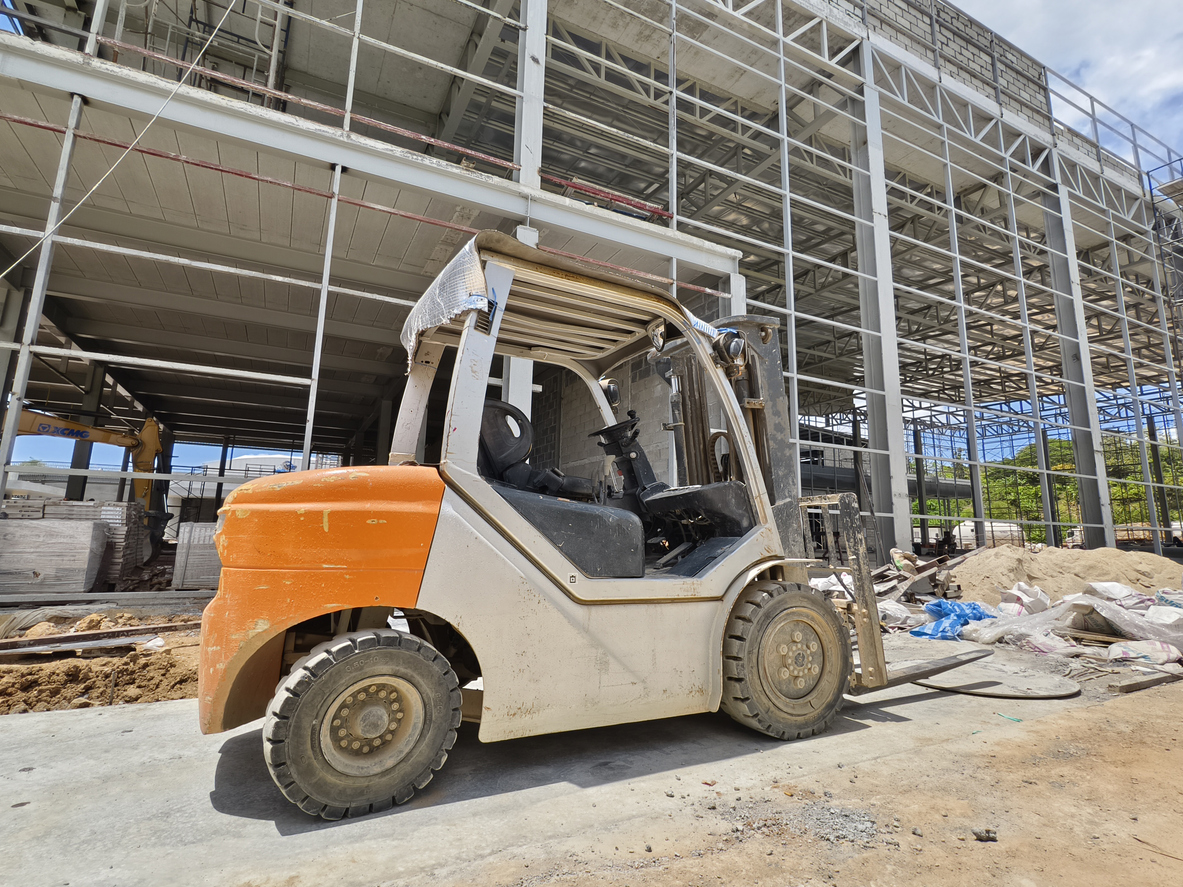
Rough terrain forklifts are specifically built for challenging outdoor construction environments.
Featuring large pneumatic tyres, increased ground clearance and durable construction, these machines are well suited to worksites with:
- Gravel
- Mud
- Uneven surfaces
- Loose soil
- Unsealed access roads
They are commonly used for handling:
- Structural steel
- Timber
- Concrete products
- Pipes
- Building materials
- Palletised deliveries
Their stability and traction allow operators to continue working where standard warehouse forklifts would struggle.
These forklifts are particularly valuable during the early stages of construction before roads and hardstand areas have been completed.
Telehandlers
Telehandlers combine the lifting capabilities of a forklift with the extended reach of a telescopic boom.
Unlike conventional forklifts, telehandlers can lift materials to elevated work areas, making them one of the most versatile machines found on construction sites.
Typical applications include:
- Roofing projects
- Multi-storey construction
- Scaffold support
- Steel erection
- Material placement at height
Many telehandlers also support a range of attachments, including:
- Pallet forks
- Buckets
- Jibs
- Work platforms (where permitted and used in accordance with Australian safety requirements)
This versatility allows one machine to perform multiple tasks throughout the life of a project.
Counterbalance Forklifts
Counterbalance forklifts remain one of the most commonly used machines across the construction industry.
They’re particularly effective in areas with stable, level surfaces such as:
- Warehouses
- Distribution areas
- Concrete slabs
- Loading docks
- Storage compounds
Counterbalance forklifts excel at:
- Unloading trucks
- Moving palletised goods
- Transporting building supplies
- Warehouse logistics
- Loading construction materials
Their simple design and excellent manoeuvrability make them ideal for day-to-day material handling once site access has improved.
Electric Forklifts
As sustainability becomes increasingly important across the construction industry, electric forklifts continue to grow in popularity.
Electric models offer several advantages, including:
- Zero exhaust emissions during operation
- Reduced noise levels
- Lower ongoing servicing requirements
- Lower operating costs
- Improved operator comfort
They are particularly suitable for:
- Indoor construction work
- Warehouses
- Fit-out projects
- Manufacturing facilities
- Enclosed workspaces
Where charging infrastructure is available, electric forklifts provide an efficient and environmentally responsible alternative to internal combustion engine models.
Diesel, LPG or Electric: Which Power Source Is Best?
Beyond choosing the right forklift type, selecting the appropriate power source is equally important.
Diesel Forklifts
Diesel forklifts are designed for demanding outdoor applications.
They’re well suited to:
- Heavy lifting
- Long operating hours
- Rough terrain
- Large construction sites
- High-capacity material handling
Their powerful engines make them ideal for projects involving substantial loads and continuous operation.
LPG Forklifts
LPG forklifts offer flexibility across a range of environments.
Advantages include:
- Quick refuelling
- Consistent performance
- Lower emissions than diesel
- Suitable for many indoor and outdoor applications where appropriate ventilation exists
Many businesses choose LPG forklifts when equipment needs to move regularly between warehouses and outdoor worksites.
Electric Forklifts
Electric forklifts continue to become more capable as battery technology advances.
Benefits include:
- Quiet operation
- No direct exhaust emissions
- Lower fuel costs
- Reduced routine maintenance
- Excellent manoeuvrability
They’re often the preferred choice where environmental performance and workplace comfort are priorities.
Factors to Consider Before Hiring or Buying a Forklift
Every building project has unique operational requirements.
Before selecting equipment, consider the following factors.
Site Conditions
Ask yourself:
- Is the ground sealed or unsealed?
- Will equipment operate on gravel or mud?
- Are there steep gradients?
- Is access restricted?
Terrain plays a major role in determining the most suitable forklift.
Load Capacity
Different materials require different lifting capacities.
Consider:
- Brick pallets
- Timber packs
- Steel beams
- Concrete products
- Mechanical equipment
- Precast panels
Selecting a forklift with appropriate capacity improves both safety and efficiency.
Lifting Height
Some projects require lifting materials to upper floors or elevated work platforms.
Telehandlers are often the preferred choice where additional reach is required.
Understanding maximum lift height before hiring equipment helps avoid costly delays later.
Project Duration
The length of your project may influence whether hiring or purchasing equipment offers better value.
Short-term projects often benefit from rental solutions, while businesses with ongoing material handling requirements may find ownership more cost-effective over time.
Attachments
Modern forklifts can often be fitted with specialised attachments that improve versatility.
Depending on the project, attachments may include:
- Pallet forks
- Rotators
- Buckets
- Jibs
- Carpet poles
- Drum handlers
Choosing compatible attachments can significantly expand the capabilities of a single machine.
Should You Hire or Buy?
Both options offer advantages depending on your business requirements.
Hiring a Forklift
Hiring may be the better option if you:
- Need equipment for a short-term project
- Experience seasonal demand
- Want access to newer equipment
- Prefer not to manage servicing and maintenance
- Require specialised equipment for a single project
Rental provides flexibility while reducing upfront capital expenditure.
Buying a Forklift
Purchasing may be more suitable if you:
- Regularly undertake construction projects
- Need equipment available at all times
- Want to build your own fleet
- Expect long-term utilisation
- Prefer ownership of business assets
For many established contractors, purchasing forklifts can deliver greater long-term value.
Why Choose Active Forklifts?
At Active Forklifts, we understand that every construction project has different material handling requirements.
Based in Fairfield East, NSW, we proudly supply businesses throughout Greater Sydney and across Australia with reliable forklift and material handling solutions tailored to their operational needs.
Our range includes:
- New forklifts
- Quality used forklifts
- Rough terrain forklifts
- Telehandlers
- Electric forklifts
- LPG and diesel forklifts
- Short and long-term forklift hire
- Forklift servicing and maintenance
- Parts and technical support
Our experienced team works closely with builders, contractors and project managers to recommend equipment that delivers the best balance of productivity, safety and value for every project.
Whether you’re managing a residential development or a large commercial construction site, we’ll help you select equipment that supports efficient material handling from start to finish.
Frequently Asked Questions
What forklift is best for uneven construction sites?
Rough terrain forklifts are generally the preferred choice for construction sites with uneven ground, gravel, mud or other challenging outdoor conditions.
Are telehandlers better than standard forklifts?
Telehandlers are ideal when materials need to be lifted to greater heights or positioned in hard-to-reach locations. Standard forklifts remain highly effective for transporting palletised materials on stable ground.
Should I hire or buy a forklift?
The right choice depends on your workload, project duration and budget. Hiring offers flexibility for short-term projects, while purchasing may provide better long-term value for businesses with ongoing equipment requirements.
Which forklift is best for indoor construction work?
Electric forklifts are often the preferred option for enclosed environments due to their quiet operation and zero exhaust emissions during use.
How do I know what lifting capacity I need?
The appropriate lifting capacity depends on the type, weight and dimensions of the materials being handled. An experienced forklift supplier can help assess your requirements and recommend suitable equipment.
Find the Right Forklift for Your Next Building Project
Selecting the right forklift is about more than lifting capacity. Site conditions, material types, project duration and operational efficiency all influence which machine will deliver the best performance on your construction site. By choosing equipment that’s suited to your specific requirements, you can improve productivity, enhance workplace safety and keep your project moving according to schedule.
At Active Forklifts, we help builders, contractors, and businesses across Sydney and Australia find reliable material handling solutions that match the demands of their projects. Whether you need short-term forklift hire, a telehandler for elevated work or a long-term fleet solution, our experienced team is ready to provide practical advice and quality equipment. Contact Active Forklifts today to discuss your next construction project and discover the right forklift solution for your business.